
[podcast]https://edwardwillett.com/wp-content/uploads//2012/12/The-Case-for-Coffee-Consumption_01.mp3[/podcast]I first wrote about coffee in a science column back in the dawn of time, so long ago that it began, “Let’s get one thing straight. I don’t drink coffee…” Since as I type this I am on my second…or maybe third… good-sized cup (oh, all right, mug) of the stuff, something has clearly changed …
Tag: medicine
On the naming of drugs
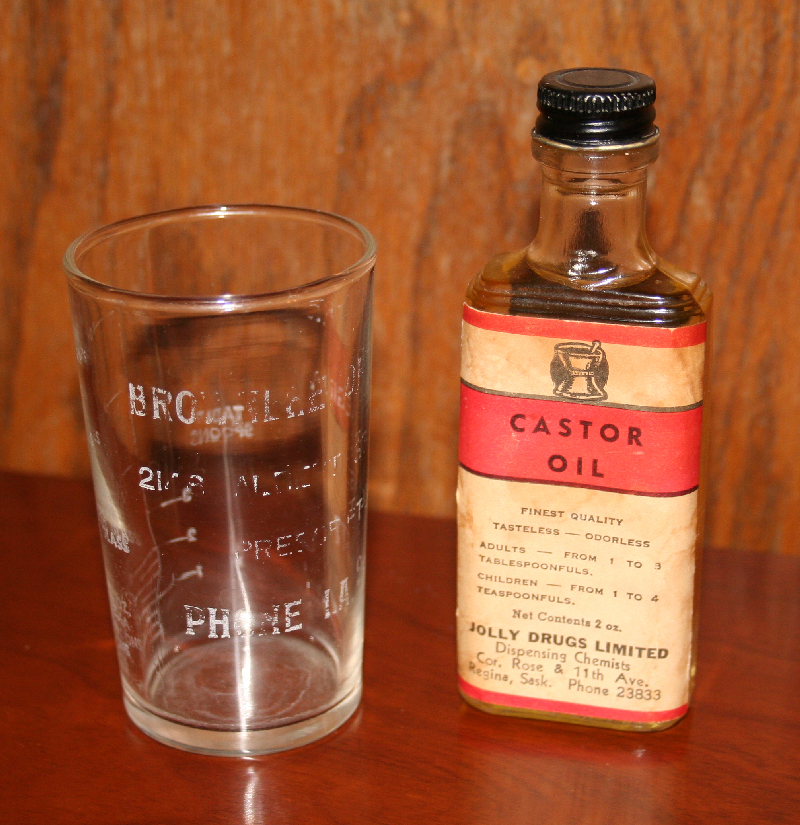
[podcast]https://edwardwillett.com/wp-content/uploads//2012/01/The-Naming-of-Drugs.mp3[/podcast] If you take a prescription drug, you’ve probably said to your pharmacist something like this. “Hi, I need a refill of the hydro… chloro… thoro… acti… zine? Zanc? Something like that.” At which point the pharmacist manfully chokes back his laughter at your pharmaceutical phonetics phailure, tactfully supplies the actual name of the drug, …
A treatment for Ebola?
[podcast]https://edwardwillett.com/wp-content/upLoads//2010/06/A-Treatment-for-Ebola.mp3[/podcast] A few years ago I wrote several books for Enslow Publishers in New Jersey for a series called Diseases and People. I covered meningitis, arthritis, hemophilia…and Ebola. My most recent book for Enslow, Disease-Hunting Scientist, also talks about Ebola, and some of the scientists who travel to the sites of outbreaks to help with …
Wooden bones
[podcast]https://edwardwillett.com/wp-content/upLoads//2010/04/Wooden-Bones.mp3[/podcast] It’s easy to not think very much about your bones. After all, they’re securely hidden away inside your body; not visible, except as hard lumps beneath your skin. Funny thing, though: once you break one, it’s hard to think about anything else. When first I wrote about bones, back in a 1993 instalment of …
I get a box full of disease detectives!
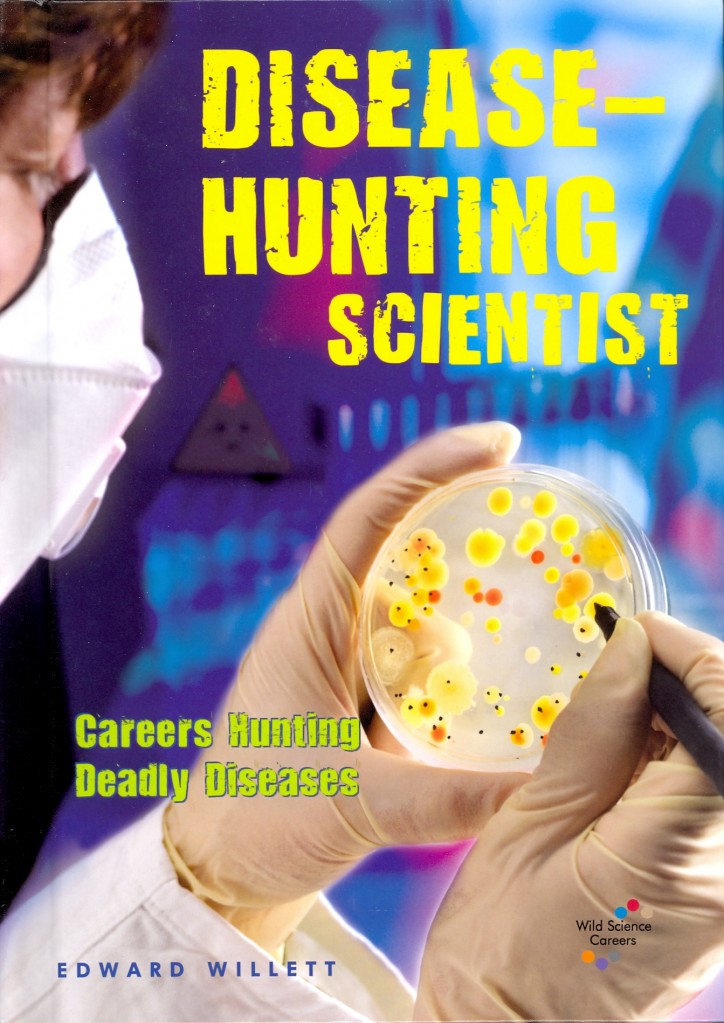
Oh, all right, not the actual detectives themselves, but my latest book from Enslow, Disease-Hunting Scientist: Careers Hunting Deadly Disease. That’s the cover at left. Here’s the blurb from the back: Working from high-tech labs in Canada or remote villages in Africa, epedemiologists travel the world trying to keep us safe from deadly diseases. Learn how …
Stop that stretching!
[podcast]https://edwardwillett.com/wp-content/upLoads//2009/07/Stretching.mp3[/podcast] There’s a perception that science is always reversing itself. If you don’t like what science has to say about, say, the health benefits or risks of a particular food (eggs, for example, or coffee), you only have to wait awhile until a contradictory study comes out. That’s because science progresses in fits and starts. …
Disease-Hunting Scientist: Marta Guerra and Ebola
[podcast]https://edwardwillett.com/wp-content/upLoads//2009/06/marta-guerra-and-ebola.mp3[/podcast] Here’s one last column condensed from a chapter in my new children’s book Disease-Hunting Scientist: Careers Hunting Deadly Diseases (Enslow Publishers): In the movie Outbreak, researchers from the U.S. Army Medical Research Institute for Infectious Diseases and the Centers for Disease Control and Prevention (CDC) have to figure out how to stop a kind …
Disease-Hunting Scientists: Jonathan Epstein and the search for SARS
[podcast]https://edwardwillett.com/wp-content/upLoads//2009/05/jonathan-epstein-and-sars.mp3[/podcast] My next book, due out this summer from Enslow Publishers, is entitled Disease-Hunting Scientist: Careers Hunting Deadly Diseases. Each of its chapters focuses on one particular scientist whose work is related to hunting disease. The chapters are much longer than these science columns, but I thought in honour of the book’s release, I’d try …
An instantaneous, universal, programmable vaccine?
[podcast]https://edwardwillett.com/wp-content/uploads/2009/03/a-universal-instant-vaccine.mp3[/podcast] Efforts to immunize people against disease go back to at least 600 B.C., when the Chinese attempted to immunize people against smallpox by putting smallpox material in their nostrils (the permitting of which, I would think, would require a great deal of faith in your doctor). Modern immunization began in 1796 when a British …
The old gray hair, she ain’t what she used to be
[podcast]https://edwardwillett.com/wp-content/uploads/2009/04/gray-hair.mp3[/podcast] Look, I hate to be the one to break it to you, but you’re growing older. Every second. Even worse, so am I. There are many manifestations of the aging process, most of which are far too depressing to go into, especially on a morning in late February. Still, we must all face facts …
Myths of the season
If there’s one thing science has taught us, it’s that just because “everybody knows” something is true, that doesn’t mean it’s true. Just in time for Christmas, two doctors, Aaron Carroll and Rachel Vreeman, both associate professors of pediatrics at Indiana University and practicing pediatricians at Riley Hospital for Children, have published a study taking …
Seizing appetite by the NAPE
’Tis the season to begin newspaper columns with the phrase “’Tis the season,” and who am I to resist? Failing to resist that particular temptation is of little moment, of course. Failing to resist another temptation endemic to this time of year is not: the temptation to eat…and eat…and eat. Why do we eat more …
My latest live walk and vlog

Buy Autographed Books
Most Recent Episodes
-
Episode 165: Dr. Katherine Hutchinson-Hayes – A Fifth of the Story
 A chat with author, podcaster, and blogger Dr. Katherine Hutchinson-Hayes about her new spy thriller, A Fifth of the Story Websitedrkatherinehayes.com Facebook@authordrkatherinehayes Instagram@authordrkatherine X@khutch0767 Dr. Katherine Huthcinson-Hayes’s Amazon Page Amazon Links for A Fifth of the StoryAmazon.comAmazon.ca About the Book A fascinating thriller of espionage that takes you into the secretive world of the CIA…
 -
Episode 164: Kristen Ciccarelli – Heartless Hunter
A chat with New York Times bestselling YA author Kristen Cicarelli about Heartless Hunter, The Crimson Moth Book 1, a “dangerously romantic Scarlet Pimpernel-inspired fantasy.” Websitekristenciccarelli.com Facebook@AuthorKristenCiccarelli Instagram@kristenciccarelli Pinterest@kciccarelli Kristen Ciccarelli’s Amazon Page Amazon Links for Heartless HunterAmazon.comAmazon.ca About the Book Enemies-to-lovers doesn’t get more high stakes than a witch and a witch hunter falling… -
Episode 163: Sebastien de Castell – Play of Shadows
A chat with award-winning fantasy author Sebastien de Castell about Play of Shadows, Book 1 of Court of Shadows, set in the world of his popular Greatcoats series. Websitedecastell.com X@decastell Facebook@decastell Sebastien de Castell’s Amazon Page Amazon Links for Play of ShadowsAmazon.comAmazon.ca About the Book Swordplay, magic, intrigue and friendships stronger than iron: the first… -
Episode 162: Lyn McGinnis – Amarel Mountain
A chat with author Lyn McGinnis about Anu Awakes, an epic fantasy series, and the most recent release in that series, Book 2, Amarel Mountain. Websiteanuawakesseries.com Bluesky@anuawakes Goodreads Instagram@anuawakes Lyn McGinnis’s Amazon Page Amazon Links for Amarel MountainAmazon.comAmazon.ca About the Book Descendants of the Tolku of the Primary Epoch, the Koru, Yakku and Yelda, now… -
Episode 161: Jared N. Michaud – Brightstar
A chat with new author Jared N. Michaud about his upcoming YA science fiction novel Brightstar, first book in the Energematric6 space adventure series. Websiteenergematrice6.com Facebook@Energematrice6 X@Energematrice6 Instagram@jarednmichaud Jared N. Michaud’s Amazon Page Amazon Links for BrightstarAmazon.comAmazon.ca About the Book Brightstar is the beginning of an epic space-adventure series that introduces readers to Nate, a… -
Episode 160: Breakfield & Burkey – Enigma Tracer
A chat with the writing team of Charles Breakfield and Rox Burkey about their long-running techno-thriller series, Enigma, and Enigma Tracer, first book in their new Enigma Heirs trilogy. Websiteenigmabookseries.com Facebook@TheEnigmaSeries X@EnigmaSeries@1rburkey Instagram@enigmabookseries YouTube Amazon Links for Engima TracerAmazon.comAmazon.ca About the Book The clock is ticking … can Gracie uncover the truth? Phillip Pliant is… -
Episode 159: Steve Truitt – The Mindset Chronicles
A chat with author and former television host Steve Truitt about his new science fiction novel series, The Mindset Chronicles. Websitestevetruitt.com Facebook@AuthorSteveTruitt Amazon Links for The DeletionAmazon.comAmazon.ca Steve Truitt’s Amazon Page About the Book In a world where artificial intelligence has become an integral part of daily life, the sudden death of all AI sends… -
Episode 158: Danièle Cybulskie – Chivalry and Courtesy: Medieval Manners for a Modern World
A chat with noted medievalist Danièle Cybulskie about her new book, Chivalry and Courtesy: Medieval Manners for a Modern World. Websitedanielecybulskie.com X/Twitter@5minmedievalist Facebook@5MinMedievalist Instagram@5minmedievalist YouTube@5MinMedievalist Amazon Links for Chivalry and CourtesyAmazon.caAmazon.com Danièle Cybulskie’s Amazon Page About the Book Medieval people are often portrayed as having poor hygiene and table manners—licking their knives or throwing chicken… -
Episode 157: Marie Brennan – The Market of 100 Fortunes (Legend of the Five Rings Book 3)
A chat with Hugo-nominated author Marie Brennan about her Legend of the Five Rings trilogy, which just wrapped up with The Market of 100 Fortunes. Websiteswantower.com Bluesky Patreon Amazon Links for The Market of 100 FortunesAmazon.caAmazon.com Marie Brennan’s Amazon Page About the Book Enthralling fantasy mystery from the world of Legend of the Five Rings as two… -
Episode 156: Douglas Smith – The Lost Expedition (The Dream Rider Saga, Book 3)
A chat with Canadian author Douglas Smith about his young adult fantasy trilogy The Dream Rider Saga, which has just culminated in Book 3, The Lost Expedition. Websitesmithwriter.com Facebook@WritingtheFantastic X/Twitter@smithwritr Instagram@douglassmithwriter Amazon Links for The Lost ExpeditionAmazon.caAmazon.com Douglas Smith’s Amazon Page About the Book The Thrilling Conclusion to the Multi-Award-Winning Trilogy Will is the Dream…