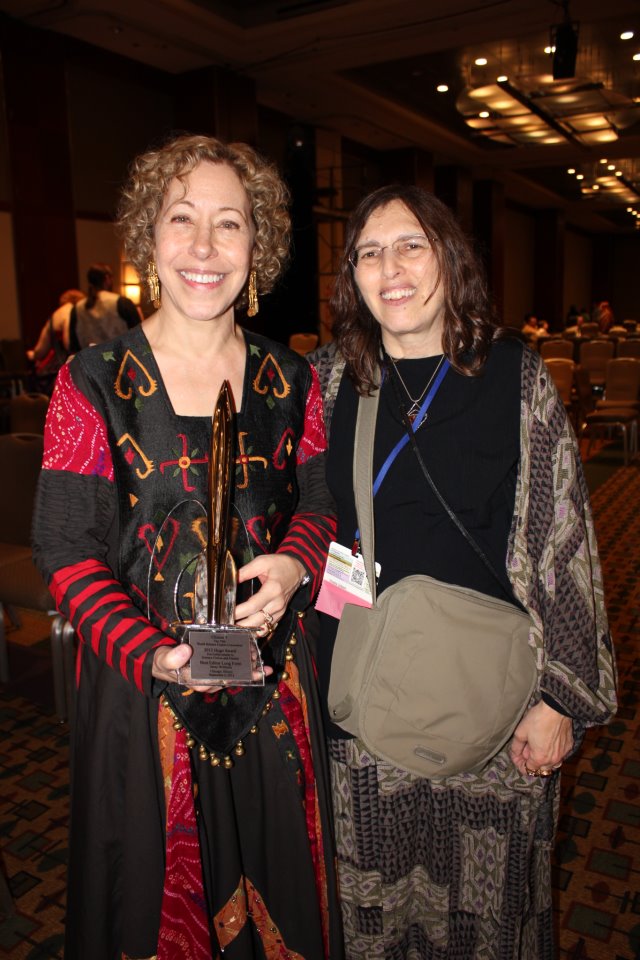
(Note: if you’re thinking this doesn’t exactly read like a typical convention report from a SF writer, that would be because this is actually my weekly science column. A slightly different version will be my column for the next issue of the Saskatchewan Writers Guild newsletter Freelance. Never let a convention go to waste! (The …
Tag: science column
A half-billion years of irritation
Just a couple of years ago, I wrote a column about the advent of tearless onions that included some background on why onions make us cry in the first place. Ordinarily I wouldn’t revisit a topic quite so soon, but you know how it is with science: things change fast, and just this week there …
Measurement
[podcast]https://edwardwillett.com/wp-content/upLoads//2009/11/Measurement.mp3[/podcast] “Inch-worm, inch-worm, measuring the marigolds…” Despite that line from a popular song, the fact is, inch-worms don’t measure anything. Neither to cockroaches, bulldogs, llamas or horned toads…because measurement is the process of counting how much of a sensory signal exists, and so far as we know, no other animals can count. Simply counting things …
Honeybees in decline
Honeybees, particularly in the United States, are in decline. In 2007-2008, 36 percent of apiaries surveyed by the Apiary Inspectors of America and the U.S. Department of Agriculture reported that some of their colonies had simply…disappeared, a phenomenon known as Colony Collapse Disorder, or CCD. In the most recent survey, covering September 2008 to April …
The thrill of the chase
[podcast]https://edwardwillett.com/wp-content/upLoads//2009/09/The-Thrill-of-the-Chase.mp3[/podcast] I had a hard time getting started on this column. See, as I was calling up the items I’d starred in Google Reader as possible topics, I thought it wouldn’t hurt to do a quick search for new reviews of my latest novel. And then I thought, well, as long as I’m online, maybe …
Montreal WorldCon: the science column
Every now and then I attend a science fiction convention, and when I do, I like to talk about it in this column, as part of my ongoing evangelical campaign to raise the profile of science fiction and win the genre new readers. Well, I just finished a doozy of a convention, the grandaddy of …
Talk to the right ear
[podcast]https://edwardwillett.com/wp-content/upLoads//2009/06/Talk-to-the-right-ear.mp3[/podcast] If someone approaches you from your left side and makes a request, are you more or less likely to grant that request than if he approaches you from your right side? If you’re thinking, “What kind of a stupid question is that?”, and you think it would be an equally stupid question no matter …
Are cognitive shortcuts making us fat?
[podcast]https://edwardwillett.com/wp-content/upLoads//2009/06/Cognitive-Shortcuts-to-Obesity.mp3[/podcast] When we think about how we make decisions, we tend to imagine that we consider the facts of a situation carefully and logically, in a straightforward, step-by-step manner. But that process is, indeed, imaginary. The truth is that our brains prefer to do as little actual thinking as possible. They like shortcuts—and sometimes those …
The Canadian Light Source
Given that the Canadian Light Source in Saskatoon produces light a million times brighter than the sun, you might well expect to be able to see it at night even from Regina. Or, upon visiting it in winter, you might think you would find thousands of sun-starved Saskatchewanians lying all around it on beach-towels in the snow, …
Cat senses
It’s said there are cat people, and there are dog people. Personally, I like both, but if I had to state a preference, I’d probably give the edge to cats. It’s not very often I have an excuse to write about them in this column, but this week I do, because by some coincidence, two …
Bacteria on a chip
There’s an old science joke that goes, “If it stinks, it’s chemistry, if it’s green and slimy, it’s biology, and if it doesn’t work, it’s physics.” Now, however, scientists are messing with these once-sacred boundaries, as they attempt to combine living cells and computer chips to create tiny, inexpensive pollution detectors. Many cells contain mechanisms …
Cassini-Huygens
If you’re a kid interested in astronomy, as I was, there are few thrills to compare with your first view of the rings of Saturn. So you can imagine how excited astronomers (and ex-kids like myself) are with the imminent arrival of the International Cassini-Huygens Mission at Saturn. The $3 billion space probe, launched October …
My latest live walk and vlog

Buy Autographed Books

Most Recent Episodes
-
Episode 165: Dr. Katherine Hutchinson-Hayes – A Fifth of the Story
 A chat with author, podcaster, and blogger Dr. Katherine Hutchinson-Hayes about her new spy thriller, A Fifth of the Story Websitedrkatherinehayes.com Facebook@authordrkatherinehayes Instagram@authordrkatherine X@khutch0767 Dr. Katherine Huthcinson-Hayes’s Amazon Page Amazon Links for A Fifth of the StoryAmazon.comAmazon.ca About the Book A fascinating thriller of espionage that takes you into the secretive world of the CIA…
 -
Episode 164: Kristen Ciccarelli – Heartless Hunter
A chat with New York Times bestselling YA author Kristen Cicarelli about Heartless Hunter, The Crimson Moth Book 1, a “dangerously romantic Scarlet Pimpernel-inspired fantasy.” Websitekristenciccarelli.com Facebook@AuthorKristenCiccarelli Instagram@kristenciccarelli Pinterest@kciccarelli Kristen Ciccarelli’s Amazon Page Amazon Links for Heartless HunterAmazon.comAmazon.ca About the Book Enemies-to-lovers doesn’t get more high stakes than a witch and a witch hunter falling… -
Episode 163: Sebastien de Castell – Play of Shadows
A chat with award-winning fantasy author Sebastien de Castell about Play of Shadows, Book 1 of Court of Shadows, set in the world of his popular Greatcoats series. Websitedecastell.com X@decastell Facebook@decastell Sebastien de Castell’s Amazon Page Amazon Links for Play of ShadowsAmazon.comAmazon.ca About the Book Swordplay, magic, intrigue and friendships stronger than iron: the first… -
Episode 162: Lyn McGinnis – Amarel Mountain
A chat with author Lyn McGinnis about Anu Awakes, an epic fantasy series, and the most recent release in that series, Book 2, Amarel Mountain. Websiteanuawakesseries.com Bluesky@anuawakes Goodreads Instagram@anuawakes Lyn McGinnis’s Amazon Page Amazon Links for Amarel MountainAmazon.comAmazon.ca About the Book Descendants of the Tolku of the Primary Epoch, the Koru, Yakku and Yelda, now… -
Episode 161: Jared N. Michaud – Brightstar
A chat with new author Jared N. Michaud about his upcoming YA science fiction novel Brightstar, first book in the Energematric6 space adventure series. Websiteenergematrice6.com Facebook@Energematrice6 X@Energematrice6 Instagram@jarednmichaud Jared N. Michaud’s Amazon Page Amazon Links for BrightstarAmazon.comAmazon.ca About the Book Brightstar is the beginning of an epic space-adventure series that introduces readers to Nate, a… -
Episode 160: Breakfield & Burkey – Enigma Tracer
A chat with the writing team of Charles Breakfield and Rox Burkey about their long-running techno-thriller series, Enigma, and Enigma Tracer, first book in their new Enigma Heirs trilogy. Websiteenigmabookseries.com Facebook@TheEnigmaSeries X@EnigmaSeries@1rburkey Instagram@enigmabookseries YouTube Amazon Links for Engima TracerAmazon.comAmazon.ca About the Book The clock is ticking … can Gracie uncover the truth? Phillip Pliant is… -
Episode 159: Steve Truitt – The Mindset Chronicles
A chat with author and former television host Steve Truitt about his new science fiction novel series, The Mindset Chronicles. Websitestevetruitt.com Facebook@AuthorSteveTruitt Amazon Links for The DeletionAmazon.comAmazon.ca Steve Truitt’s Amazon Page About the Book In a world where artificial intelligence has become an integral part of daily life, the sudden death of all AI sends… -
Episode 158: Danièle Cybulskie – Chivalry and Courtesy: Medieval Manners for a Modern World
A chat with noted medievalist Danièle Cybulskie about her new book, Chivalry and Courtesy: Medieval Manners for a Modern World. Websitedanielecybulskie.com X/Twitter@5minmedievalist Facebook@5MinMedievalist Instagram@5minmedievalist YouTube@5MinMedievalist Amazon Links for Chivalry and CourtesyAmazon.caAmazon.com Danièle Cybulskie’s Amazon Page About the Book Medieval people are often portrayed as having poor hygiene and table manners—licking their knives or throwing chicken… -
Episode 157: Marie Brennan – The Market of 100 Fortunes (Legend of the Five Rings Book 3)
A chat with Hugo-nominated author Marie Brennan about her Legend of the Five Rings trilogy, which just wrapped up with The Market of 100 Fortunes. Websiteswantower.com Bluesky Patreon Amazon Links for The Market of 100 FortunesAmazon.caAmazon.com Marie Brennan’s Amazon Page About the Book Enthralling fantasy mystery from the world of Legend of the Five Rings as two… -
Episode 156: Douglas Smith – The Lost Expedition (The Dream Rider Saga, Book 3)
A chat with Canadian author Douglas Smith about his young adult fantasy trilogy The Dream Rider Saga, which has just culminated in Book 3, The Lost Expedition. Websitesmithwriter.com Facebook@WritingtheFantastic X/Twitter@smithwritr Instagram@douglassmithwriter Amazon Links for The Lost ExpeditionAmazon.caAmazon.com Douglas Smith’s Amazon Page About the Book The Thrilling Conclusion to the Multi-Award-Winning Trilogy Will is the Dream…