
All right, this time it’s for real: I’m pulling the plug on my weekly science column (I haven’t written one for about a month anyway). And it’s all MailChimp’s fault. MailChimp is actually a great way to send out nicely formatted HTML newsletters, and I’m very glad to use it for that purpose. However, MailChimp …
Tag: Science Columns

The science of tall trees
[podcast]https://edwardwillett.com/wp-content/uploads//2013/01/Tall-Trees.mp3[/podcast] Sometimes science is focused on really big questions: where did life come from? How did the universe begin? But sometimes, the focus is much smaller. Sometimes, researchers set out to answer a simple question, one that many people have perhaps asked, but no one has ever set out systematically to answer. A question, for …
Planets, planets everywhere
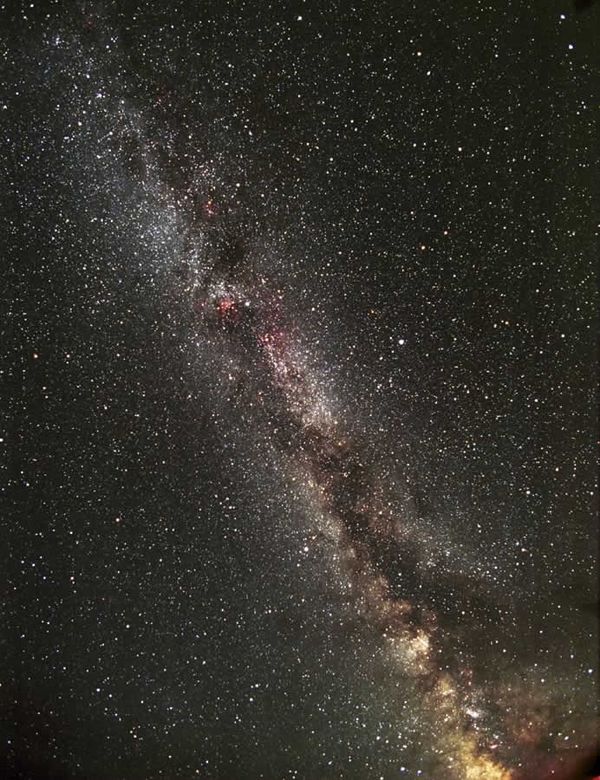
[podcast]https://edwardwillett.com/wp-content/uploads//2013/01/Planets-Everywhere.mp3[/podcast] You don’t have to be very old to remember a time when we didn’t know if there were any planets anywhere else in the universe beyond those in our own solar system. Oh, sure, scientists and science fiction writers had long assumed these extrasolar planets existed, but the stars were so distant it seemed …

The science of calendars
(A slightly updated version of a New Year’s perennial of mine…) It’s almost 2013, which means it’s time to take down your old Harry Potter calendar and put up your new one (if you’re my 11-year-old daughter). Okay, so maybe you have a Teddy Bears calendar instead, or a Glee calendar. The point is, for …
A Christmas tradition: ‘Twas the Nocturnal Time of the Preceding Day to the Day We Call Christmas
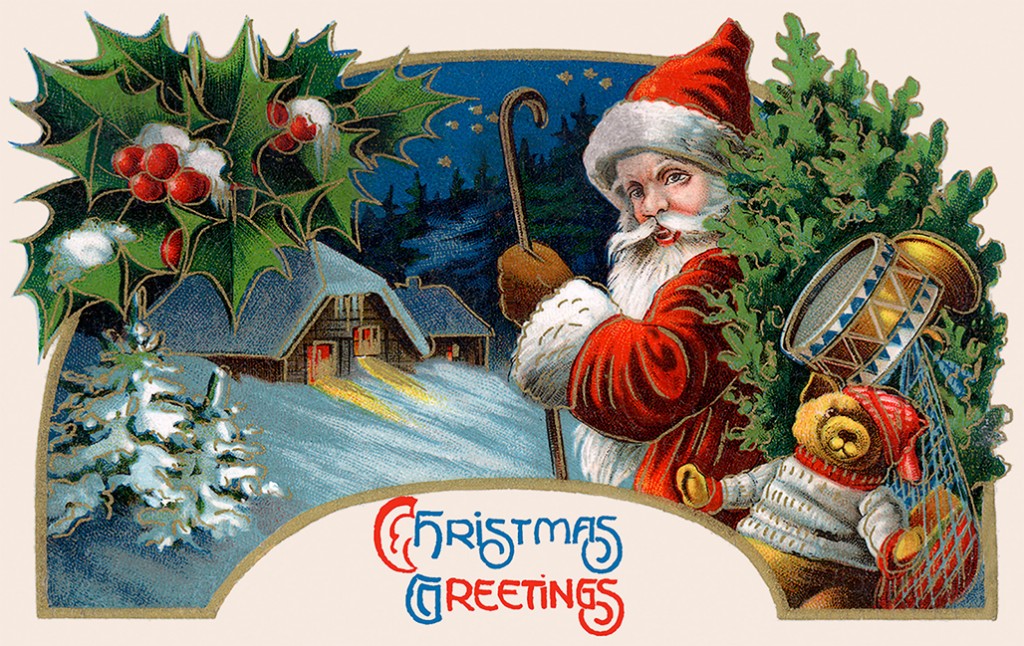
There’s a great song called “Christmas Cliches” in which the singer expresses a love of all the Christmas things that come ’round year after year, from plywood reindeer on the roof to Johnny Mathis on the radio. One of the reasons we love Christmas (those of us who do, and you can certainly count me …

The science of Rudolph’s red nose
Long-time readers of my column will be aware of how closely I like to keep tabs on aerotarandusdynamics, the shamefully under-studied science of flying reindeer. I am pleased to note that there has been a small but significant development in aerotarandusdynamics research this year, but before I get to that, perhaps I should recap some …

Circadian desynchrony and the blue light special
[podcast]https://edwardwillett.com/wp-content/uploads//2012/12/Circadian-Deosynchrony-and-the-Blue-Light-Special.mp3[/podcast] We’re coming up on the shortest day of the year in the northern hemisphere: at the latitude I live at, in Regina, Saskatchewan, that means that today the sun rose at 8:49 a.m. and will set at 4:54 p.m. We’ll lose a few more minutes yet before the winter solstice. That’s not a lot …

The case for coffee consumption
[podcast]https://edwardwillett.com/wp-content/uploads//2012/12/The-Case-for-Coffee-Consumption_01.mp3[/podcast]I first wrote about coffee in a science column back in the dawn of time, so long ago that it began, “Let’s get one thing straight. I don’t drink coffee…” Since as I type this I am on my second…or maybe third… good-sized cup (oh, all right, mug) of the stuff, something has clearly changed …

A solution to the world’s food problems?
[podcast]https://edwardwillett.com/wp-content/uploads//2012/11/Sundrop-Farms_01_01.mp3[/podcast] If I told you something has been built in the Australian outback in the past couple of years that can be solidly argued is one of the most important technological advances in decades, would you have a clue what I was talking about? You wouldn’t? Well, I wouldn’t have either until this past weekend …

Butterfly buildings
At the end of August and beginning of September, I and my wife and daughter were in Chicago for the World Science Fiction Convention…and a fair bit of touristy sightseeing, including taking in the (highly recommended) architectural river tour offered by the Chicago Architecture Institute. In the little over a decade since the last time …

Saturday Special: Lisa Fernando and Canada’s epidemic response team
In view of the announcement this week that Canada will send a mobile laboratory to help stem an outbreak of Ebola in the Democratic Republic of Congo, I offer an account of a similar effort from Canada to help combat an outbreak of Marburg hemmorhagic fever (closely related to Ebola) in Angola a few years …

Throwing like a girl
[podcast]https://edwardwillett.com/wp-content/uploads//2012/09/Throwing-Like-a-Girl.mp3[/podcast] There’s a scene in Huckleberry Finn where Huck is attempting to pass himself off as a girl, but is betrayed, in part, by the way he throws a lump of lead at a rat: “And when you throw at a rat or anything, hitch yourself up a tiptoe and fetch your hand up over …
My latest live walk and vlog

Buy Autographed Books
Most Recent Episodes
-
Episode 165: Dr. Katherine Hutchinson-Hayes – A Fifth of the Story
 A chat with author, podcaster, and blogger Dr. Katherine Hutchinson-Hayes about her new spy thriller, A Fifth of the Story Websitedrkatherinehayes.com Facebook@authordrkatherinehayes Instagram@authordrkatherine X@khutch0767 Dr. Katherine Huthcinson-Hayes’s Amazon Page Amazon Links for A Fifth of the StoryAmazon.comAmazon.ca About the Book A fascinating thriller of espionage that takes you into the secretive world of the CIA…
 -
Episode 164: Kristen Ciccarelli – Heartless Hunter
A chat with New York Times bestselling YA author Kristen Cicarelli about Heartless Hunter, The Crimson Moth Book 1, a “dangerously romantic Scarlet Pimpernel-inspired fantasy.” Websitekristenciccarelli.com Facebook@AuthorKristenCiccarelli Instagram@kristenciccarelli Pinterest@kciccarelli Kristen Ciccarelli’s Amazon Page Amazon Links for Heartless HunterAmazon.comAmazon.ca About the Book Enemies-to-lovers doesn’t get more high stakes than a witch and a witch hunter falling… -
Episode 163: Sebastien de Castell – Play of Shadows
A chat with award-winning fantasy author Sebastien de Castell about Play of Shadows, Book 1 of Court of Shadows, set in the world of his popular Greatcoats series. Websitedecastell.com X@decastell Facebook@decastell Sebastien de Castell’s Amazon Page Amazon Links for Play of ShadowsAmazon.comAmazon.ca About the Book Swordplay, magic, intrigue and friendships stronger than iron: the first… -
Episode 162: Lyn McGinnis – Amarel Mountain
A chat with author Lyn McGinnis about Anu Awakes, an epic fantasy series, and the most recent release in that series, Book 2, Amarel Mountain. Websiteanuawakesseries.com Bluesky@anuawakes Goodreads Instagram@anuawakes Lyn McGinnis’s Amazon Page Amazon Links for Amarel MountainAmazon.comAmazon.ca About the Book Descendants of the Tolku of the Primary Epoch, the Koru, Yakku and Yelda, now… -
Episode 161: Jared N. Michaud – Brightstar
A chat with new author Jared N. Michaud about his upcoming YA science fiction novel Brightstar, first book in the Energematric6 space adventure series. Websiteenergematrice6.com Facebook@Energematrice6 X@Energematrice6 Instagram@jarednmichaud Jared N. Michaud’s Amazon Page Amazon Links for BrightstarAmazon.comAmazon.ca About the Book Brightstar is the beginning of an epic space-adventure series that introduces readers to Nate, a… -
Episode 160: Breakfield & Burkey – Enigma Tracer
A chat with the writing team of Charles Breakfield and Rox Burkey about their long-running techno-thriller series, Enigma, and Enigma Tracer, first book in their new Enigma Heirs trilogy. Websiteenigmabookseries.com Facebook@TheEnigmaSeries X@EnigmaSeries@1rburkey Instagram@enigmabookseries YouTube Amazon Links for Engima TracerAmazon.comAmazon.ca About the Book The clock is ticking … can Gracie uncover the truth? Phillip Pliant is… -
Episode 159: Steve Truitt – The Mindset Chronicles
A chat with author and former television host Steve Truitt about his new science fiction novel series, The Mindset Chronicles. Websitestevetruitt.com Facebook@AuthorSteveTruitt Amazon Links for The DeletionAmazon.comAmazon.ca Steve Truitt’s Amazon Page About the Book In a world where artificial intelligence has become an integral part of daily life, the sudden death of all AI sends… -
Episode 158: Danièle Cybulskie – Chivalry and Courtesy: Medieval Manners for a Modern World
A chat with noted medievalist Danièle Cybulskie about her new book, Chivalry and Courtesy: Medieval Manners for a Modern World. Websitedanielecybulskie.com X/Twitter@5minmedievalist Facebook@5MinMedievalist Instagram@5minmedievalist YouTube@5MinMedievalist Amazon Links for Chivalry and CourtesyAmazon.caAmazon.com Danièle Cybulskie’s Amazon Page About the Book Medieval people are often portrayed as having poor hygiene and table manners—licking their knives or throwing chicken… -
Episode 157: Marie Brennan – The Market of 100 Fortunes (Legend of the Five Rings Book 3)
A chat with Hugo-nominated author Marie Brennan about her Legend of the Five Rings trilogy, which just wrapped up with The Market of 100 Fortunes. Websiteswantower.com Bluesky Patreon Amazon Links for The Market of 100 FortunesAmazon.caAmazon.com Marie Brennan’s Amazon Page About the Book Enthralling fantasy mystery from the world of Legend of the Five Rings as two… -
Episode 156: Douglas Smith – The Lost Expedition (The Dream Rider Saga, Book 3)
A chat with Canadian author Douglas Smith about his young adult fantasy trilogy The Dream Rider Saga, which has just culminated in Book 3, The Lost Expedition. Websitesmithwriter.com Facebook@WritingtheFantastic X/Twitter@smithwritr Instagram@douglassmithwriter Amazon Links for The Lost ExpeditionAmazon.caAmazon.com Douglas Smith’s Amazon Page About the Book The Thrilling Conclusion to the Multi-Award-Winning Trilogy Will is the Dream…